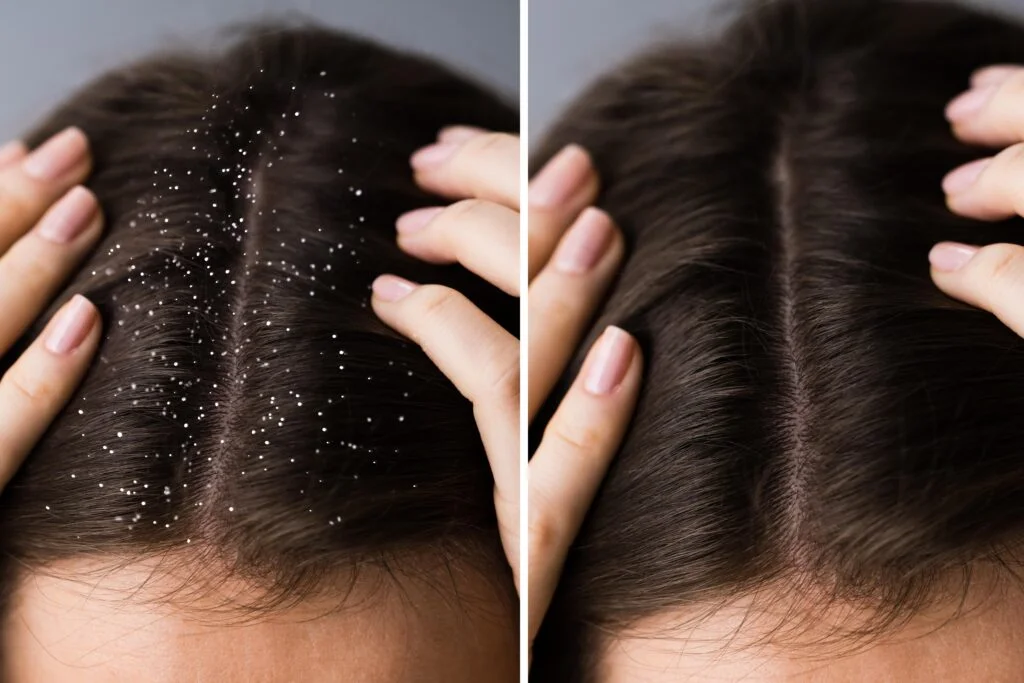
Frequent dandruff flakes usually call for better scalp care rather than aggressive scratching. Dandruff can produce visible flakes and itching, and washing habits can influence how manageable it becomes.
The scalp needs direct attention. Washing only the hair lengths, using treatment shampoo incorrectly, or giving up after one application may leave the underlying flaking unchanged.
Dandruff Is More Than a Cleanliness Issue
Dandruff is a common scalp condition, and it is not simply proof that someone is unclean. Oily skin, hair-care habits, and certain skin conditions can all contribute to flaking.
The American Academy of Dermatology notes that mild dandruff can often be managed with regular washing and appropriate dandruff shampoo. AAD dandruff treatment guidance
Some skin wellness context found online may help people become more familiar with scalp terminology, but persistent dandruff still needs to be judged by its actual pattern and response to care.
Wash the Scalp, Not Only the Hair
Dandruff shampoo needs contact with the scalp. Applying it mainly to the ends of the hair misses the area where flakes originate.
Different products contain different active ingredients, and their directions are not interchangeable. Some shampoos need to remain on the scalp briefly before rinsing, so following the label matters.
| Scalp Issue | Practical Step | Mistake to Avoid |
|---|---|---|
| Visible flakes | Wash scalp regularly | Ignoring scalp skin |
| Persistent dandruff | Use treatment shampoo | Rinsing immediately |
| Dry hair lengths | Focus treatment on scalp | Coating all hair unnecessarily |
| Poor response | Reassess routine | Endless scratching |
People using careful self-care resources should remember that frequency may differ by hair texture and scalp oiliness. One washing schedule does not fit everyone.
Match Washing to Your Hair and Scalp
AAD guidance notes that people with fine or naturally straight hair and oily scalps may need more frequent shampooing, while people with coarse, curly, or coily hair may wash less often. Treatment shampoo can also dry the hair, which is one reason scalp-focused application matters.
Broader personal wellness content can complement day-to-day habits, but it should not replace evaluation when scalp symptoms stop looking like ordinary dandruff.
What Common Dandruff Advice Gets Wrong
Scratching flakes away does not treat the reason they keep returning. Fingernails may irritate the scalp and create small areas of broken skin, especially when itching is intense.
Another mistake is assuming every flaky scalp is dandruff. Psoriasis, eczema, seborrheic dermatitis, and some scalp infections can produce overlapping signs. If a dandruff routine repeatedly fails, continuing to rotate random products may delay a more useful evaluation.
Signs That Deserve Medical Attention
Consider seeing a dermatologist if dandruff remains severe despite appropriate shampoo use or if the scalp develops thick plaques, significant redness, pain, oozing, sores, or noticeable hair loss.
AAD guidance specifically advises professional evaluation when dandruff does not improve and notes that other scalp conditions can resemble or contribute to persistent flaking.
Frequently Asked Questions
Should dandruff shampoo be applied to the hair or scalp?
The scalp should be the main target because that is where dandruff develops. Hair lengths may need separate conditioning depending on your hair type.
Can oily hair still have dandruff?
Yes. Dandruff can occur with an oily scalp, and some people with oily hair benefit from more frequent washing.
Why does one dandruff shampoo stop helping?
Different dandruff products use different active ingredients. If one approach is ineffective, a dermatologist or product directions may help guide a more appropriate alternative.
Treat the Scalp Consistently
Frequent flakes are easier to manage when shampooing is directed at the scalp and products are used according to their instructions. Resist scratching, pay attention to your hair type, and give a sensible routine a fair chance.
If flaking is severe, painful, associated with hair loss, or resistant to appropriate dandruff care, arrange a dermatology evaluation rather than assuming you only need a stronger shampoo.
This article is for general informational purposes and is not a substitute for professional medical advice, diagnosis, or treatment.