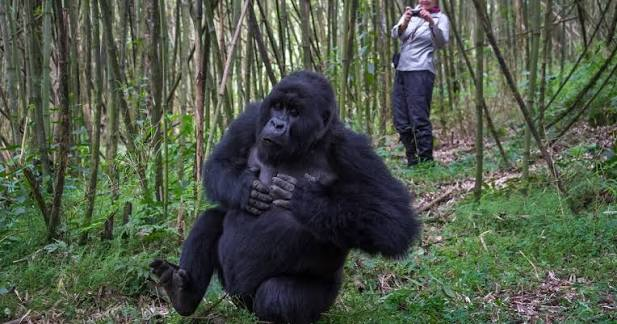
Gorilla Trekking Difficulty: An Honest Guide for Rwanda and Uganda Gorilla trekking has a reputation problem. Brochures show serene encounters with silverbacks, while forums show people describing the hardest morning of their lives. Both are telling the truth. The experience is not a technical climb, and you do not need to be an athlete. But it is not a stroll either, and the people who struggle most are usually the ones who were told it would be easy. This guide lays out what gorilla trekking in Rwanda and Uganda actually demands, how the two countries differ, and how to prepare, so the hardest part is the hike and not the hour you spent travelling thousands of miles for. Whether you are planning a single trek or one of the many gorilla safaris in Uganda and Rwanda that combine both countries, the fitness questions are the same. The short answer If you can walk steadily uphill for two to four hours, on uneven ground, carrying a small daypack, you can probably do it. If you can comfortably do a long hilly day hike at home, you will be fine in most cases. If a flight of stairs leaves you winded, you should prepare, choose your trek carefully, and plan on a porter. The key point is that the difficulty is unpredictable. Gorillas are wild and they move. The family you are assigned can be thirty minutes from the trailhead on the day you go, or five hours away. Nobody can promise you the easy version. What a gorilla trek actually involves A typical trek has three phases. The approach. You walk from the park trailhead, guided by rangers and trackers who have been following the gorillas since dawn. This can last anywhere from under an hour to a full morning. Occasionally in Uganda, and less often in Rwanda, it stretches well beyond that. The encounter. Once you reach the gorillas, you leave walking sticks and bags in a safe spot and spend a maximum of one hour with them. This part is mostly standing, crouching, and shuffling a few steps. It is physically easy, though trackers sometimes cut through vegetation to reposition, and you may need to move quickly if the group relocates. The return. You walk back, usually by a similar route, often tired and sometimes in rain. This is where the fatigue of the morning shows up. Descents on wet, steep slopes are harder on knees and balance than most people expect. Altogether, a day can run from about three hours to eight or more. Most treks fall somewhere in the middle, and a reasonable planning assumption is four to six hours on your feet. The four things that make a gorilla trek hard Altitude. Both countries' gorilla habitats sit high. In Rwanda's Volcanoes National Park, you start at roughly 2,400 metres or more and may climb higher. Bwindi Impenetrable Forest in Uganda covers a broad altitude range, with many trails in the 1,500 to 2,500 metre band. You are not at extreme altitude, but the thin air makes slopes feel steeper, and you may be breathing harder than your fitness would suggest. Arriving a day or two early helps your body adjust, and a slow, steady pace helps more than anything. Terrain. This is the real challenge. Trails are often steep, narrow, and muddy, and when the gorillas are deep in the forest the trackers leave the path entirely. You will climb over roots, slide down banks, and wade through undergrowth. Bwindi earned its name for a reason. Balance, leg strength, and comfort with imperfect footing matter more than raw cardio. Weather. Rain can arrive in any month, and the wettest periods make everything slipperier. Mud adds effort to every step. Cold at altitude and wet clothing can drain energy quickly. Uncertainty. You will not know the duration or difficulty until you are walking. That makes pacing and reserves important. Treat the first hour as a warm-up and do not burn out early. Gorilla trekking in Rwanda vs Uganda Neither country is categorically easier, but there are tendencies worth knowing. Gorilla trekking in Rwanda (Volcanoes National Park) The volcanic slopes are generally open, with farmland and a bamboo and hagenia forest belt. Terrain can be steep and the trailhead altitude is higher, so breathlessness is the main issue. Treks range from short walks to demanding ones, and the park assigns visitors to gorilla families. Rangers do take fitness and preference into account when allocating groups, so you can ask for an easier one, though it depends on where the families are that day. Some groups are known to be more distant than others, and a few are the traditional choice for people wanting a harder day. The park is compact, and roads to the trailheads are good, which makes logistics smoother for gorilla trekking in Rwanda, especially on a short trip. Gorilla safaris in Uganda (Bwindi and Mgahinga) Bwindi's dense, hilly forest has a reputation for being the tougher walking environment, with very steep ridges and valleys, and more time spent off established paths. It also has the largest range of difficulty. Some groups can be reached in under an hour, while others involve a long, strenuous day. Different sectors of the park, and different families within them, vary widely, so it is worth discussing your fitness with your operator or lodge when you book. Mgahinga, on the Virunga slopes near the Rwandan border, has fewer groups and can be more variable, since its gorillas range across borders. The practical takeaway: in either country, say honestly how fit you are when the permit is allocated, and ask for the gentlest available group. You cannot pick an easy day, but you can improve your odds. Double gorilla trekking: is it too much? Some travellers book double gorilla trekking, meaning two separate treks, often on consecutive days, and sometimes one in Rwanda and one in Uganda. It is a popular way to see more of the gorillas and to hedge against an unlucky day, since one trek may be short even if the other is long. It is also more demanding. Tired legs, muddy boots, and a second day on steep ground catch out people who coped fine with the first. If you are considering double gorilla trekking: Build your training plan around back-to-back long hikes, not just one. Schedule rest and recovery time if you can, rather than stacking treks on tight travel days. Hire a porter for both days.…