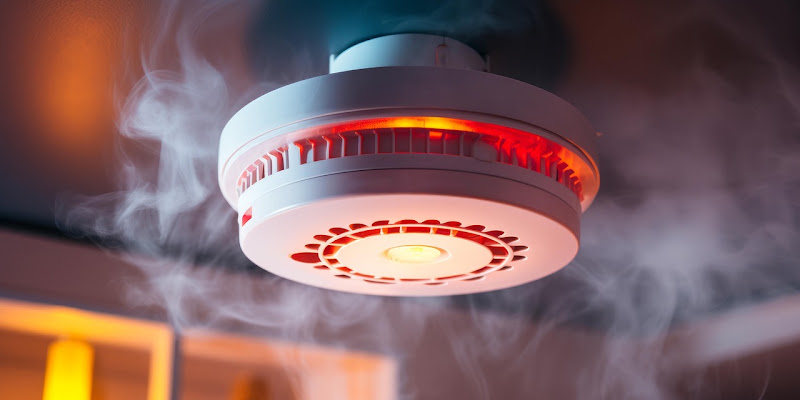
Innovation in Fire Monitoring as a Competitive Edge
The fire safety business has always been about vigilance. But vigilance alone doesn’t cut it anymore. Clients expect speed, foresight, and proof that risks are being handled before they spiral. That’s why when someone searches for a Fire Watch Company Near Me, they’re not just looking for a guard they’re looking for a system that thinks ahead.
The new rhythm of fire safety
Old-school fire watch was reactive. A guard spots smoke, radios it in, waits. That lag can cost millions. Now, operations lean on predictive systems that flag anomalies before they become alarms. Research published in the International Journal of Science and Research Archive shows that AI-driven fire detection reduces false alarms by nearly 40% and improves early wildfire identification by 50%. Numbers like these aren’t abstract they translate directly into saved assets and fewer lawsuits.

https://pixabay.com/photos/ai-monitoring-desktop-business-man-3262759
Why innovation sells
Safety is obvious, but the competitive edge is subtler. A property manager comparing two firms one offering routine patrols, another showcasing smart monitoring knows which feels more reliable. Thermal imaging backed by intelligent analysis has boosted hotspot detection accuracy by 30%. Drone surveillance, guided by pattern recognition, has raised early detection rates in fire-prone areas by 60%. These aren’t gimmicks. They’re selling points.
The human factor isn’t gone
There’s a misconception that technology replaces guards. It doesn’t. It extends them. Predictive dashboards feed real-time data, letting teams act faster. Drones cover rooftops and remote corners. Guards still walk the floors, but now they’re supported by systems that see more, sooner. It’s augmentation, not substitution.
Evidence that matters
Studies from Springer Nature’s Handbook of Cognitive and Autonomous Systems for Fire Resilient Infrastructures highlight how big data combined with intelligent monitoring reshapes risk assessment and fire forecasting. Another special issue in Fire journal points to the role of IoT and digital twins in structural fire safety monitoring. These aren’t speculative papers they’re roadmaps for where the industry is heading.
The competitive landscape
Firms that cling to traditional methods risk irrelevance. The market is shifting toward those who can prove foresight. Insurance companies already factor in whether properties are monitored by advanced systems. Clients increasingly ask not “Do you have guards?” but “What tech backs them up?” That’s the new trust signal.
https://pixabay.com/photos/boots-uniform-firefighter-clothing-6068160
Where operations stand today
In practice, integration looks like this:
- Smart sensors feeding heat and smoke data into centralized dashboards.
- Predictive analytics anticipating risks before escalation.
- Drone patrols covering blind spots.
- Guards trained to interpret and act on system alerts.
It’s a layered approach. Human vigilance plus machine precision.
The unfinished story
The industry is at a turning point. Some firms will adapt, others will fade. Research already shows that intelligent monitoring detects smoke and fire signs two to three times faster than traditional systems. That’s not a minor tweak it’s a fundamental shift.
And maybe that’s the real competitive edge: not just having the tech, but knowing how to weave it into daily operations so seamlessly that clients barely notice. They just feel safer.