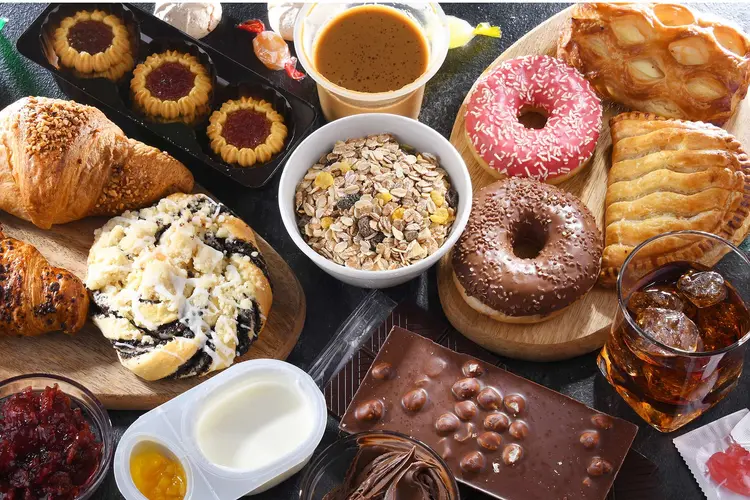
Snacks can quietly add substantial energy to the day when they’re easy to eat, lightly filling, and available in large packages. The answer isn’t necessarily to stop snacking. Choosing foods that better satisfy hunger can make snacks work more like small meals and less like automatic grazing.
Portion awareness matters too, especially with calorie-dense foods that are easy to eat directly from a bag or box.
First Ask Whether You’re Actually Hungry
A snack can serve different purposes. Sometimes you’re physically hungry because lunch was small or several hours have passed. Other times you’re eating because you’re bored, stressed, watching television, driving, or simply standing near available food.
That distinction changes the solution. True hunger may call for a filling snack. Habit-driven eating may respond better to changing the environment or waiting until you can decide intentionally.
Build Snacks With More Staying Power
Fruit paired with yogurt, vegetables with hummus, whole-grain toast with peanut butter, or a small combination of protein and fiber can be more substantial than sweets or refined snacks eaten alone.
People exploring practical lifestyle reading may encounter elaborate snack formulas, yet simple foods can work perfectly well.
You don’t need every snack to contain an ideal nutrient ratio. The main question is whether it satisfies the level of hunger you actually have.
Watch the Package, Not Only the Food
Nuts, trail mix, chips, crackers, granola, dried fruit, and other snack foods can be easy to overeat when the package stays open beside you. Portioning an amount into a bowl or plate creates a natural stopping point.
General everyday wellbeing material can be useful for habit ideas, but package labels give more direct information about serving size and nutrients in a specific product.
CDC explains that serving size on the Nutrition Facts label reflects an amount people typically consume and isn’t necessarily a recommended portion. CDC guide to the Nutrition Facts label
| Snack Pattern | Potential Issue | More Filling Option |
|---|---|---|
| Candy alone | Low staying power | Fruit with yogurt |
| Chips from bag | Easy grazing | Portioned snack plus hummus |
| Sweet drink | Adds energy quickly | Water plus food snack |
| Crackers alone | Limited protein | Crackers with cheese |
Make Better Options Easy to Reach
Food environment matters more than people often admit. If the quickest option is a box of cookies on the counter while fruit needs washing, cutting, and searching, convenience will influence the choice.
Keeping yogurt visible, washing fruit ahead of time, portioning nuts, or storing ready-to-eat vegetables at eye level can reduce friction. The same principle applies when reading general nutrition content: advice is most useful when it translates into something easy enough to do repeatedly.
Planning snacks before leaving home can also reduce reliance on vending machines, convenience stores, or oversized restaurant snacks.
Why “Healthy” Snacks Can Still Become Excessive
A health-oriented label doesn’t cancel portion size. Nuts, granola, nut butters, energy bites, smoothies, and dried fruit can all fit into nutritious diets, yet they can also contribute more energy than expected when portions grow.
The reverse mistake is choosing an extremely small snack when you’re genuinely hungry, then continuing to eat several other foods afterward. Sometimes a more substantial first choice is simpler. Hunger level, meal timing, food quality, and portion size all matter together.
When Does Snacking Need Professional Attention?
Talk with a healthcare professional if eating patterns involve recurrent loss of control, binge episodes, severe restriction, frequent dizziness, fainting, unexplained weight change, persistent excessive hunger, or other symptoms that concern you.
People with diabetes, gastrointestinal conditions, pregnancy-related nutritional needs, eating disorders, or medically prescribed diets may require advice that differs from general snack guidance. Individual assessment is more appropriate than rigid calorie rules in those situations.
Frequently Asked Questions
Is snacking always unhealthy?
No. A snack can be useful when there is a long gap between meals or when hunger genuinely appears. Food choice, portion size, overall diet, and the reason for eating matter more than the word “snack.”
What makes a snack more filling?
Many people find combinations containing protein, fiber, or both more satisfying. Examples include yogurt with fruit, vegetables with hummus, or whole-grain toast with nut butter.
Should I count every snack calorie?
Detailed tracking isn’t necessary for everyone and can be unhelpful for some people. Portion awareness, hunger cues, food quality, and regular meals may provide enough structure without constant numerical monitoring.
Make Snacks Do a Real Job
A useful snack should solve a problem: genuine hunger, a long gap between meals, or the need for convenient nourishment. If it becomes automatic background eating, changing the food environment and portioning habits may help.
Choose satisfying foods more often, eat them intentionally, and judge the pattern across the whole day rather than treating one snack as a success or failure.
This article is for general informational purposes and is not a substitute for professional medical advice, diagnosis, or treatment.